

In Mauritius, history is something you can taste. A single family lunch might bring together an Indian-style curry, a French-influenced tomato rougaille, Chinese fried noodles and a fiery chilli paste, all at the same table.
The island's cooking grew out of the people who settled here: French colonists, enslaved Africans and Malagasy people, Indian indentured labourers and Chinese traders. Each brought ingredients and techniques that, over two centuries, merged into a cuisine that is unmistakably Mauritian. This guide covers the home-cooked and sit-down dishes worth seeking out. For snacks on the go, see our street food guide.
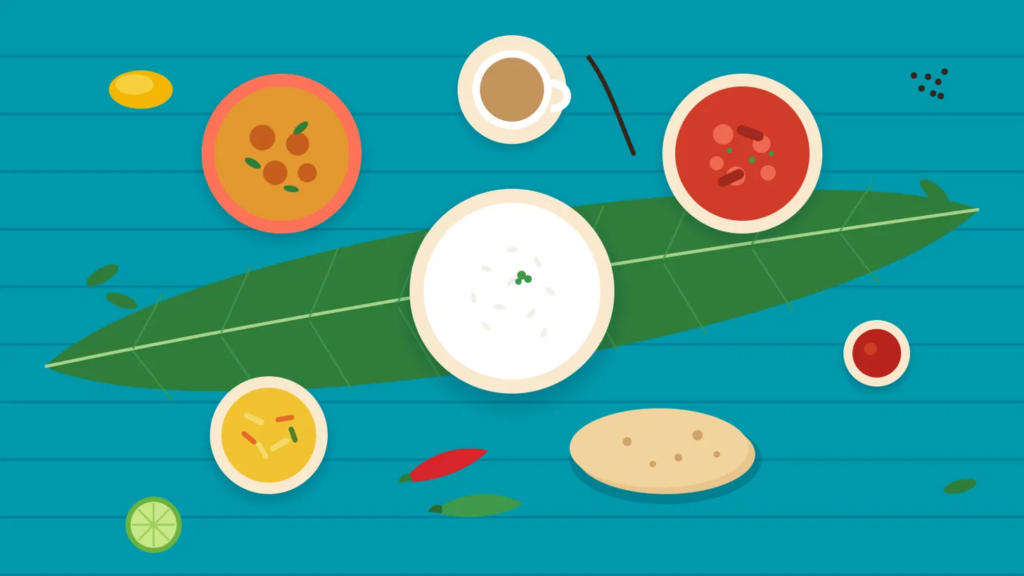
At a glance
- Core flavours: tomato, garlic, ginger, thyme, chilli, curry leaves, turmeric and fresh coriander
- Everyday staples: rice, lentils (dholl), bread, fish and seafood
- Signature dishes: rougaille, cari, vindaye, mine frit, bouillon brèdes
- Always on the table: achards (pickled vegetables) and a fresh chilli paste
- Best way in: a market morning, a table d'hôte lunch, or an invitation to a Mauritian home
Four kitchens, one island
Mauritius had no native population, so everything on the plate arrived with someone. Four main traditions shaped the island's cooking, and most everyday dishes borrow from more than one.
- French and Creole. French settlers brought slow-cooked stews, bread and a love of thyme, garlic and tomato. Enslaved Africans and Malagasy people adapted these into Creole staples such as rougaille, made with what grew locally. Baguettes are still part of daily life, often split and filled with curry.
- Indian. From 1834, indentured labourers arrived from India through what is now Aapravasi Ghat in Port Louis. They brought spices, lentils, flatbreads and the many curries (cari) that are now the backbone of Mauritian cooking.
- Chinese. Hakka and Cantonese traders brought fried noodles, fried rice, dumplings and soups. Dishes like mine frit and boulettes are eaten by everyone, not just the Sino-Mauritian community.
- Island produce. Sugar cane, the ocean and a tropical climate added fresh fish, octopus, palm heart, chouchou (chayote), breadfruit, cassava and plenty of chillies.
The result is a shared kitchen. A Mauritian home may cook a Creole rougaille on Monday, an Indian dholl and rice on Tuesday and Chinese noodles on Wednesday, and nobody sees anything unusual in that.
Dishes to know
These are the dishes you will find in Mauritian homes, family restaurants and tables d'hôte. Most are served with white rice, and often with lentils (dholl), achards and a chilli paste on the side.
| Dish | Roots | What to expect |
|---|---|---|
| Rougaille | Creole, French | A tomato, onion, garlic and thyme sauce with a chilli kick, cooked with sausages, salted fish, prawns or chicken |
| Cari (curry) | Indian | Chicken, goat, fish or octopus in a Mauritian masala with curry leaves; eaten with rice, roti or farata |
| Vindaye | Indian | Fish or octopus fried, then dressed with mustard seed, turmeric, garlic and vinegar; served at room temperature |
| Daube | French, Creole | A slow-cooked stew, often chicken, beef or venison, in a rich tomato and herb sauce |
| Bouillon brèdes | Creole | A light broth of leafy greens with garlic and ginger; simple, everyday comfort food |
| Mine frit | Chinese | Stir-fried noodles with vegetables, egg, chicken or shrimp, finished with soy and chilli |
| Bol renversé | Chinese-Mauritian | Rice topped with a stir-fry and a fried egg, turned upside down onto the plate |
| Salade de palmiste | Island produce | Thinly sliced heart of palm; once called "millionaire's salad" because a whole palm is used |
| Achards | Indian | Vegetables pickled with mustard seed, turmeric and chilli; served with almost everything |
| Satini and mazavaroo | Indian, Creole | Fresh chutneys (coconut, tomato, coriander) and a fierce chilli paste; use sparingly at first |
If you see poisson (fish), ourite (octopus), cerf (venison) or poulet (chicken) on a menu, it usually names the main ingredient of one of these dishes: cari ourite is octopus curry, and rougaille poisson salé is salted fish rougaille.
Where to eat it
The best Mauritian food is rarely in hotel restaurants. Go where locals eat, and go early.
Port Louis Central Market
The capital's market has stood on its site since the 1830s, under British rule, and was refurbished in 2004. Arrive in the morning for piles of island-grown vegetables, tropical fruit and spices, then head to the covered food court for curries, roti, noodles and fritters. Haggling is expected at the produce and craft stalls. The market is generally open Monday to Saturday, with shorter hours on Sunday mornings.
Regional markets
Weekly markets bring the same mix of produce and cooked food to towns across the island. Flacq in the east is known for its Wednesday and Sunday market, Goodlands in the north for Wednesdays and Saturdays, and Quatre Bornes for its vegetable market and weekend bazaar. Market days can change, so check locally before you go.
Tables d'hôte
A table d'hôte is a home-style set meal, often served at a family guesthouse, a restored colonial house or a small country restaurant. You eat what the kitchen cooks that day, typically several dishes shared at the table. It is one of the best ways to try rougaille, cari and vindaye side by side, made the way Mauritian families make them.
Plantation lunches
On the south's "tea route", estates such as Bois Chéri and Domaine de Saint Aubin combine a factory or distillery visit with a traditional Mauritian lunch on a colonial veranda.
Family restaurants and snack bars
In towns such as Port Louis, Rose Hill, Curepipe and Mahébourg, small family restaurants serve plates of curry and rice, mine frit and bol renversé at local prices. If a place is full of office workers at lunchtime, it is usually a good sign.
Drinks and sweets
Rum
Sugar cane has covered much of Mauritius for centuries, and rum is its most famous by-product. Distilleries such as Rhumerie de Chamarel in the south-west and Domaine de Saint Aubin offer tours and tastings. Look out for rhum arrangé, rum infused with fruit, vanilla or spices, which many families also make at home.
Tea
Tea grows on the cooler, wetter uplands in the south. Vanilla-flavoured tea is the local favourite and makes an easy gift to take home. Mauritians drink tea with milk and sugar, often with a plate of biscuits or a slice of cake.
Alouda and fresh juices
Alouda, a chilled milk drink with basil seeds and agar jelly, is the classic market refresher; our street food guide covers where to find it. Fresh sugar cane juice, coconut water and fruit juices are sold at roadside stalls and markets.
Sweets and cakes
- Napolitaine: two shortbread rounds sandwiched with jam and topped with pink icing, a fixture of birthdays and tea time
- Gâteau patate: sweet potato dumplings filled with coconut, then fried
- Gâteau coco: coconut cakes, chewy and sweet
- Fruit with chilli salt: green mango, pineapple or tamarind sold in small bags with salt and chilli, a beach snack loved by Mauritians
Around Divali, many families make and share sweets such as gulab jamun, barfi and gato la cire, and visitors are often offered some by neighbours and hosts.
Tips for eating like a local
- Ask for the chilli on the side. Mauritian food is flavourful rather than always hot, but mazavaroo and fresh chillies can be fierce.
- Eat early. Market food courts and lunch spots are busiest from late morning, and popular dishes sell out.
- Carry cash. Small stalls and markets rarely take cards.
- Respect dietary customs. Many Hindu households avoid beef and many Muslim households avoid pork, so menus vary. Vegetarian options are easy to find.
- Say yes to an invitation. If a Mauritian family invites you for a meal or a festival, it is the best food you will eat on the island.
Quick answers
What is the national dish of Mauritius?
There is no single official dish. Dholl puri, rougaille and curry are the ones most Mauritians would name.
Is Mauritian food spicy?
It is well seasoned, but heat is usually added at the table with chilli paste, so you can control it.
Is it easy to eat vegetarian in Mauritius?
Yes. Lentils, vegetable curries, brèdes and achards are everyday food.
What should I bring home?
Vanilla tea, local rum, spice blends and achards travel well. Check your home country's customs rules first.
Sources
- The Essential Guide to Port Louis' Central Market — Culture Trip
- Mauritian markets: strolling through flavours and colours — market days
- Mauritian Tea Route Tour with Bois Chéri — Musement
- Aapravasi Ghat — UNESCO World Heritage Centre
- Discover the Best Street Food in Mauritius — Mauritius.com